

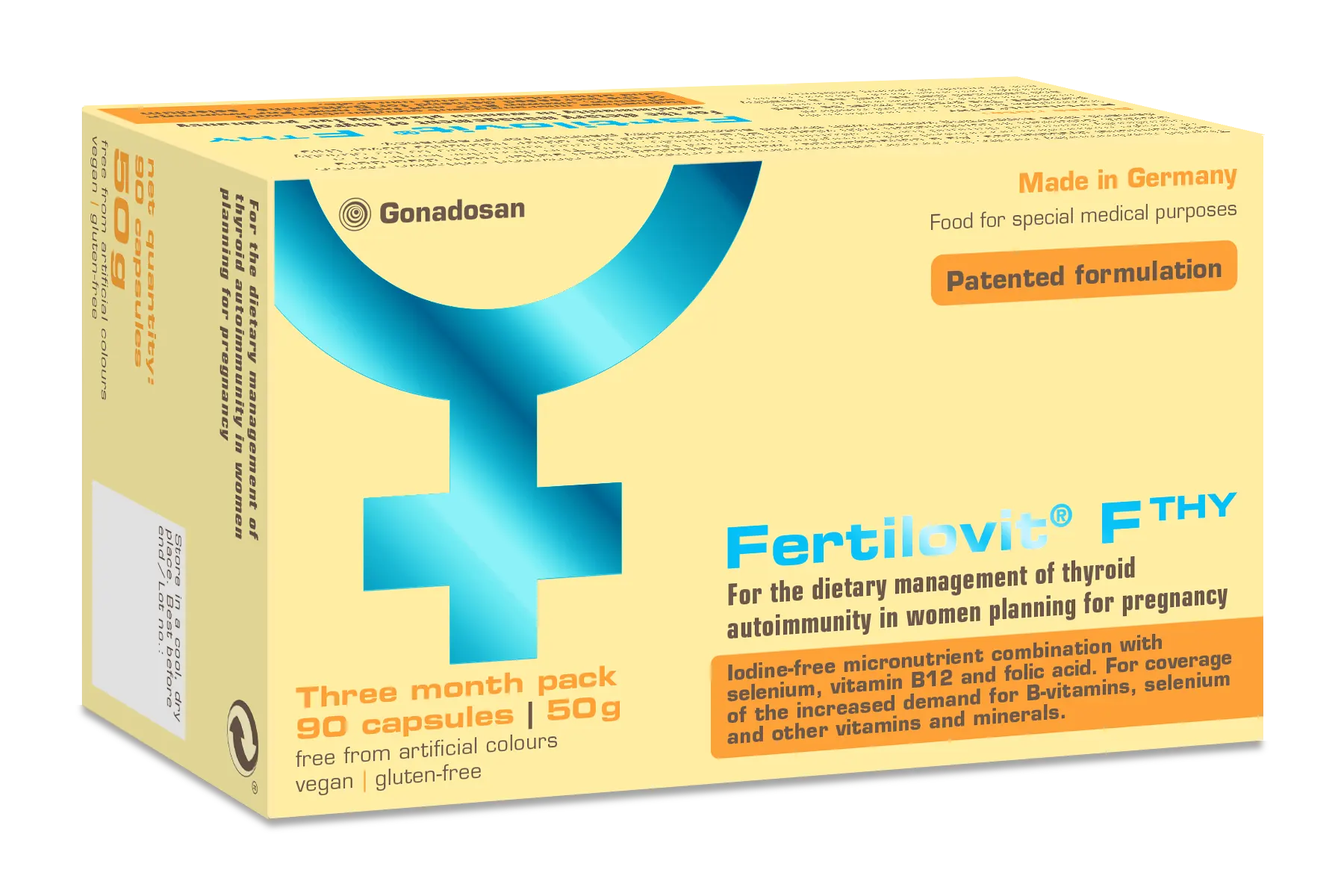
Fertilovit F THY is a pre-pregnancy biologically active supplement without iodine. Contains 800 µg of folic acid and selenium. Vitamin C with sustained release.
What is Fertilovit F THY?
Fertilovit F THY is a biologically active supplement specially designed to meet the needs of women planning to conceive but suffering from autoimmune thyroiditis. Its special composition helps prepare the female body for conception and rapid pregnancy, thus creating excellent conditions for the normal development of the fetus.
- Iodine-free
- Important antioxidants, partly with sustained release
- Folic acid
- Selenium
- B vitamins
- Iron
- Magnesium
- Coenzyme Q10
Autoimmune thyroiditis and the desire to have children
Chronic autoimmune thyroiditis is a chronic inflammatory disease of the thyroid gland of autoimmune origin. It can manifest itself in various forms. In Hashimoto’s thyroiditis, the most common type, antibodies produced by the immune system begin to consider the thyroid cells as foreign. As a result, the production of thyroid hormones is significantly reduced (hypothyroidism or hypothyroidism). Graves’ disease is less common, which, on the contrary, is associated with the production of antibodies directed against a signaling molecule on the surface of thyroid cells. This leads to the fact that the thyroid cells produce an excessive amount of hormones (hyperthyroidism or hyperthyroidism). Over time, however, many patients also suffer from hypothyroidism. One in six women is prone to autoimmune thyroiditis, and, in fact, about ten percent of them produce autoantibodies. However, the etymology of the disease is still unknown. Scientific research has found a connection with various factors, such as: heredity, excessive intake of iodine-containing medications, hormonal changes during pregnancy or menopause, smoking, and radiation.
Symptoms
With hyperthyroidism, the following symptoms are observed: insomnia, nervousness, hot flashes, rapid heartbeat and hair loss. Hypothyroidism, in turn, manifests itself in weight gain, fatigue, decreased overall work productivity, sensitivity to cold, inattention and can even cause depressive disorders.
Women with autoimmune thyroiditis who want to become pregnant suffer from reduced sexual desire, menstrual irregularities, reduced fertility, and an increased risk of miscarriage. In such cases, infertility treatment with thyroid hormones can promote a healthy pregnancy. The patient herself can increase the effectiveness of treatment by leading a healthy lifestyle and following a diet that takes into account the characteristics of the disease.
Low iodine diet
According to scientific studies, excessive iodine intake worsens the course of the disease. It is necessary to follow a diet low in iodine. Therefore, patients with autoimmune thyroiditis are recommended to abandon iodized table salt, as well as any iodine-containing food supplements.
Vitamins and minerals that boost fertility
Everyone has long known how important it is for the human body to have a sufficient supply of certain vitamins and minerals. All gynecologists recommend taking folic acid and B vitamins, as they perform a protective function at the initial stage of neurological development of the embryo. It is increasingly clear that other vitamins and minerals also significantly affect fertility. Scientific studies have shown that iron and B vitamins are important for a healthy conception.
Selenium
Soils in Europe are not rich in selenium. Accordingly, plants grown in this soil have a low selenium content. Selenium is indicated for autoimmune thyroiditis. But, unfortunately, its content in food is very low. Studies have shown that taking selenium significantly improves symptoms in patients with autoimmune thyroiditis.
Oxidative stress
Although, as mentioned above, the causes of autoimmune thyroiditis are not fully understood, recent studies have shown that oxidative stress can provoke this disease. Oxidative stress is damage to the body’s cells by reactive oxygen species [ROS]. Oxidative stress increases the immunological shock in the thyroid gland. Many experts argue that it is the cause of most of the symptoms. Oocytes are particularly susceptible to attack by reactive oxygen species. Oxidative stress can disrupt the membrane and interfere with protein synthesis, as well as energy production.
Antioxidants
Normally, ROS produced in the body are suppressed by the body’s own defense system. However, if the amount of ROS is too high or the antioxidants are too low, this delicate balance is disrupted and cells are damaged.
Stress, smoking and an unbalanced diet weaken the body’s antioxidant system, in such cases, taking additional antioxidants can improve the symptoms of autoimmune thyroiditis and protect oocytes from the adverse effects of oxidative stress.
B vitamins
Studies have shown that patients suffering from autoimmune thyroiditis are at risk of vitamin B deficiency. In particular, this can be a problem when planning a pregnancy, because vitamin B12 is necessary not only for cell division, but also, in combination with folic acid and vitamin B6, for homocysteine metabolism. Specialists recommend that patients suffering from thyroid diseases additionally take vitamin B.
Taking into account the results of recent studies, a fundamentally new dietary supplement Fertilovit F THY was developed for special medical purposes. It contains all the necessary trace elements that contribute to improving reproductive health and the condition of the thyroid gland.
Dosage form:
capsules.
Packaging:
90 capsules, enough for a 3-month course.
Composition:
Magnesium oxide, L-ascorbic acid (19.0%), encapsulating coating – cellulose, iron citrate, coenzyme Q10, calcium-D-pantothenate. nicotinamide, D-alpha-tocopheryl acetate, uncoupling component silicon dioxide, maltodextrin, pyrodexin-HCl, thiamine-HCl, riboflavin, zinc oxide, thickener gum arabic, pteroylglutaric acid (0.15%). biotin. sodium selenite (0.02%), cholecalciferol, dye titanium dioxide (capsule), dye orange-yellow S (capsule), cyanocobalamin.
Additional information:
The composition of Fertilovit F THY meets the special needs of a woman planning a pregnancy but suffering from autoimmune thyroiditis.
| 1 capsule contains | Per 100 g | %RDA* | |
|---|---|---|---|
| Calorie content | 3,89 кДж (0,96ккал) | 903 кДж (218ккал) | |
| Proteins | 0,041 g | 9,5 g | |
| Fats | 0,035 g | 8,6 g | |
| Carbohydrates | 0,06 g | 13,86 g | |
| Vitamin C | 100 mg | 23203 mg | 125 |
| Vitamin E | 15 mg | 3480 mg | 125 |
| Vitamin B1 | 4 mg | 928 mg | 364 |
| Vitamin B2 | 4,5м mg | 1044 mg | 321 |
| Pantothenic acid | 18 mg | 4177 mg | 300 |
| Vitamin B6 | 5,4 mg | 1253 mg | 386 |
| Vitamin B12 | 9 µg | 2 mg | 360 |
| Folic acid | 800 µg | 186 mg | 400 |
| Vitamin D | 5 µg | 1,16 mg | 100 |
| Niacin | 17 mg | 3944 mg | 106 |
| Biotin | 180 µg | 42 mg | 360 |
| Zinc | 2,25 mg | 522 mg | 50 |
| Magnesium | 100 mg | 23203 mg | 32 |
| Iron | 7,5 mg | 1740 mg | 54 |
| Selenium | 100 µg | 23 mg | 181 |
| Coenzyme Q10 | 20 mg | 4641 mg |
(*)% of the recommended daily allowance
Fertilovit F THY does not contain lactose and gelatin.
Scientifically proven effect of the components of the Fertilovit F THY preparation:
Ascorbic acid (vitamin C)
Vitamin C is a water-soluble antioxidant, and like fat-soluble vitamins such as vitamin E, it protects the body’s cells from oxidative stress. Studies have shown that oxidative stress contributes to the worsening of symptoms of autoimmune thyroiditis, and that taking antioxidants has a positive effect on the condition of patients. Vitamin C also promotes the absorption of iron. However, women should avoid high doses of vitamin C, as it dries out the cervical fluid, preventing sperm from reaching the egg. That is why Fertilovit® F THY contains a relatively low dose of vitamin C. The slow release of vitamin C provides a positive effect for many hours.
Zinc
Zinc is one of the most important trace elements. The human body does not synthesize it, it must come from food. Zinc plays an important role in the metabolism of carbohydrates, fats and proteins. Zinc is also essential for the immune and hormonal systems, as well as for antioxidant enzymes. In addition, zinc is needed for the nucleic acids DNA and RNA, which play an important role in cell division, tissue regeneration and embryonic development. Last but not least, zinc is necessary for the metabolism of thyroid hormones.
Vitamin E
Numerous studies have shown that taking vitamin E can improve fertility. The antioxidant properties of vitamin E contribute to improving the condition of oocytes, as it protects them from the harmful effects of oxidative stress.
Niacin
Niacin belongs to the group of B vitamins. It is present in every living cell and can be concentrated in the liver. It creates an important building block of various coenzymes and is involved in basic metabolic processes. In addition, it has antioxidant properties.
Vitamin B1
Thiamine or vitamin B1 is a water-soluble vitamin. It supports the normal functioning of the nervous system.
Vitamin B2
Vitamin B2 or riboflavin is colloquially called the “growth vitamin”. It is an important precursor of coenzymes, that is, it plays a fundamental role in metabolism.
Vitamin B5
Vitamin B5 or pantothenic acid is necessary for the formation of coenzyme A. The coenzyme plays an important role in metabolism. It is involved in the synthesis and breakdown of carbohydrates, fats and proteins, and is crucial for the production of cholesterol, which is needed for the synthesis of steroid hormones, many of which significantly affect reproduction.
Vitamin B6
Vitamin B6 is commonly used to relieve symptoms of premenstrual syndrome and menopause. Recent studies have shown its importance for reproductive health. Vitamin B6 is involved in the metabolism of homocysteine, a potentially dangerous amino acid, which it converts into other, harmless molecules. Vitamin B6 deficiency is manifested by hyperhomocysteinemia, which negatively affects fertility.
Vitamin B12
Recent studies have shown that vitamin B12 may contribute to fertility and reduce the risk of miscarriage. Like vitamin B6, it is necessary for the degradation of homocysteine. A 2006 study showed that patients suffering from autoimmune thyroiditis are at risk of developing vitamin B12 deficiency.
Vitamin D3
Vitamin D3 regulates the metabolism of phosphorus and calcium, is necessary for normal growth and bone formation. In addition, it is necessary for the normal development and functioning of the nervous and muscular systems.
Folic acid
Folic acid is easily destroyed during long-term storage and heat treatment of food, so many people are prone to its deficiency, despite the fact that it is contained in large quantities in fruits and vegetables. Folic acid deficiency in pregnant women increases the risk of developing birth defects and neural tube defects in the fetus, for example, spina bifida. Folic acid has antioxidant properties. Together with B vitamins, it participates in the degradation of homocysteine, a potentially dangerous amino acid, which it converts into other, harmless molecules. Increased homocysteine levels are known to lead to infertility, impaired placental function and an increased risk of miscarriage. A Polish study published in 2003 showed that the quality of oocytes of women who took folic acid during infertility treatment improved.
Biotin
Biotin belongs to the group of B vitamins. It is a component of enzymes and is involved in basic metabolic processes. It is also known to be involved in epigenetic regulation of gene function. Animal studies have shown that biotin deficiency reduces fertility and increases the risk of developing birth defects.
Magnesium
Magnesium deficiency is not uncommon during pregnancy. This is due to increased magnesium excretion, on the one hand, and the child’s need for magnesium, on the other. The first symptom of magnesium deficiency may be cramps in the calves, it can also manifest itself in increased excitability of the uterine muscles and, worst of all, provoke premature birth.
Iron
Iron, the main component of hemoglobin, is considered an indispensable building nutrient of blood. It is also necessary for the normal metabolism of thyroid hormones. Hypothyroidism, however, is associated with reduced iron absorption, which leads to an increased risk of iron deficiency. Women with iron deficiency are at increased risk of reduced fertility, as iron is known to promote fertility and support ovulation. In addition, experts recommend checking hemoglobin levels when planning to conceive, as iron requirements increase during pregnancy.
Selenium
Studies have shown that taking selenium in high doses can improve symptoms of Hashimoto’s thyroiditis due to two of its properties. First, selenium is needed for the metabolism of thyroid hormones. Second, selenium has antioxidant properties and can counteract reactive oxygen species, which are formed as a by-product of thyroid hormone synthesis.
Coenzyme Q10
Coenzyme Q10 (CoQ10) is needed for energy production in mitochondria. Of all the cells in the body, oocytes contain the largest number of mitochondria. In women over 35, mitochondrial dysfunction is usually observed, which reduces their energy production and leads to an increase in ROS (reactive oxygen species) and, therefore, to oxidative stress, which reduces the quality of oocytes. Experts believe that this may be one of the main reasons for the age-related decline in fertility. For a long time, it seemed that there was no need for supplements containing coenzyme Q10. However, recent studies have shown that coenzyme Q10 levels can significantly decrease with age. As expected, studies have shown a significant improvement in embryonic development after taking coenzyme Q10.
Indications for use:
Fertilovit F THY is a biologically active food supplement intended for women suffering from autoimmune thyroiditis who are preparing for pregnancy. Do not use Fertilovit F THY if you are allergic to any of the active or inactive ingredients of the drug.
If you need to take thyroid hormones, please do not use them simultaneously with Fertilovit F THY, because the iron in the supplement may react with the hormones, thereby reducing their effectiveness.
Special precautions and storage conditions:
Fertilovit F THY is a dietary supplement for special medical purposes. It cannot and should not replace a healthy lifestyle and a well-balanced diet. Before use, please read the instructions.
Side effects have only been identified due to overdose of some components of the drug. Therefore, it is important not to exceed the recommended dosage.
Please consult your doctor before using Fertilovit F THY. Store Fertilovit F THY in a cool, dry place out of the reach of children, at a temperature not exceeding 25°C.
Fertilovit F THY application method and doses:
For optimal results, Fertilovit F THY should be started at least 90 days before you plan to conceive. However, Fertilovit F THY can be started at any time.
Take 1 capsule per day.
Do not exceed the recommended dose. Do not chew, drink plenty of water. Do not take Fertilovit F THY and thyroid hormones at the same time, as iron may react with them, thereby reducing their effectiveness.
Made in Germany to order:
Gonadosan AG, Zollstrasse 34, FL – 9490 Vaduz, Liechtenstein
www.gonadosan.com
Sales and distribution:
PKA-Vertriebs-GmbH Romerstrasse 2, A – 6900 Bregenz, Austria
www.fertilovit.com