

What is Fertilovit F?
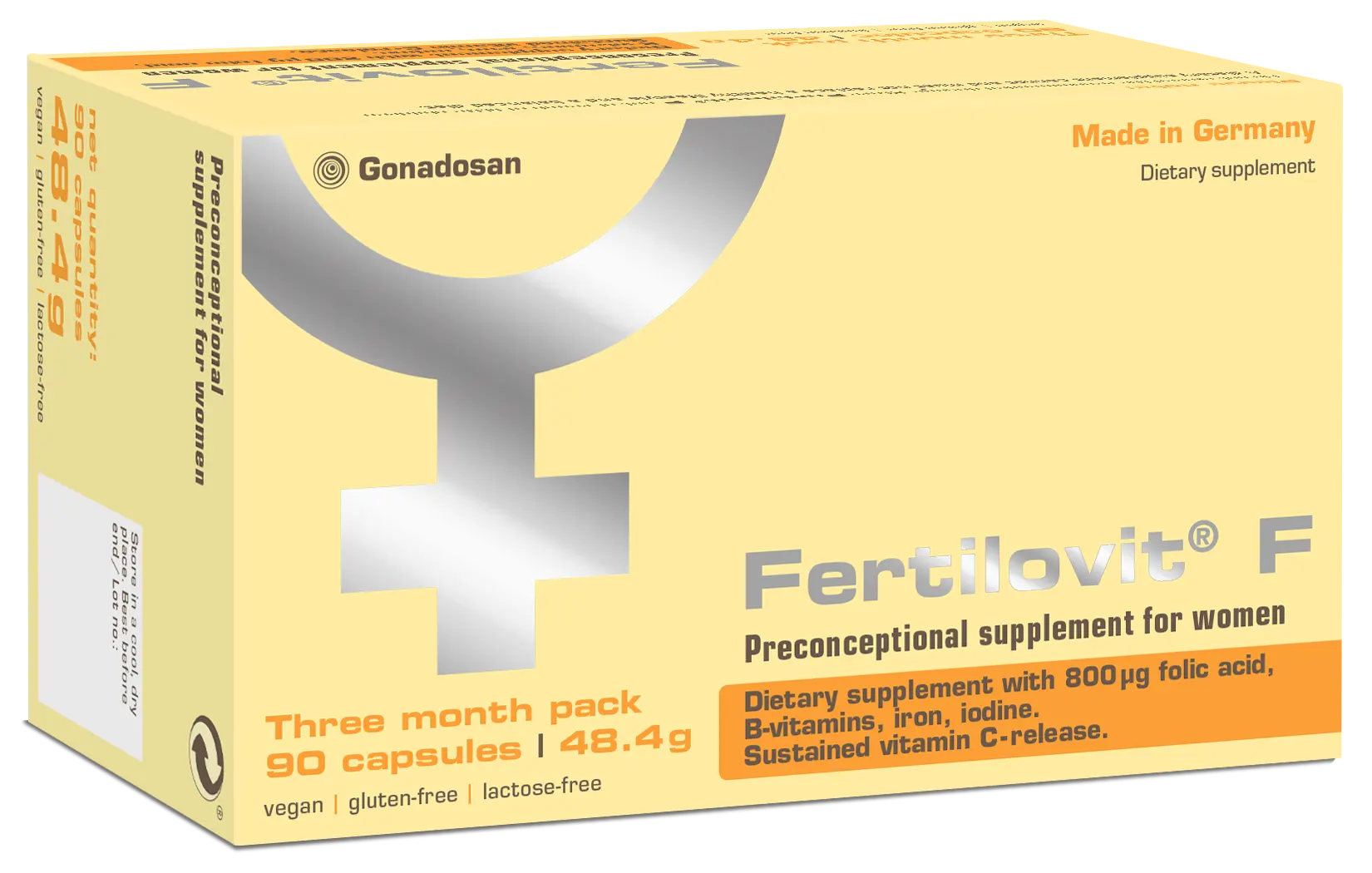
Fertilovit F is an antioxidant multivitamin complex specially developed by reproductive medicine experts to meet the needs of women who want to get pregnant. Fertilovit F prepares your body for a healthy conception and a quick pregnancy to increase your chances of conceiving.
How does Fertilovit F work?
Fertilovit F supports reproductive health by providing complete vitamin and antioxidant support during pregnancy planning.
The importance of adequate support with certain vitamins and minerals has long been recognized. Every gynecologist recommends folic acid, in particular, due to its protective role in the early neurological development of the embryo. It is increasingly clear that other vitamins and minerals can also significantly influence conception. Scientific studies have shown that iron and B vitamins are particularly important for a healthy conception.
Antioxidants, on the other hand, are vital for protecting against the harmful effects of oxidative stress.
Oxidative stress
The term oxidative stress refers to the destruction of body cells by reactive oxygen species (ROS). Normally, ROS produced in the body are neutralized by the body’s protective oxidative system. However, if there are too many ROS or too few antioxidants, this delicate balance can be disrupted and damage the body’s cells. Oocytes are particularly susceptible to attack by reactive oxygen species. Oxidative stress can damage the cell membrane and disrupt protein synthesis and energy production.
This calls into question the quality of oocytes and has a detrimental effect on embryo development. Experts also link late pregnancy problems to oxidative stress. In addition, oxidative stress is considered responsible for the age-related decrease in the ability to conceive.
Taking into account the latest discoveries, conception experts have developed the Fertilovit F preconception complex. In addition to a wide variety of important vitamins and minerals, it also contains a large number of antioxidants. For maximum protection throughout the day, vitamin C, as one of the main antioxidants, is released in a slow-release form.
Fertilovit F is an antioxidant multivitamin complex for conception that ensures pregnancy, as well as the healthy development of your child. Fertilovit F can significantly contribute to your chances of getting pregnant!
Form of use:
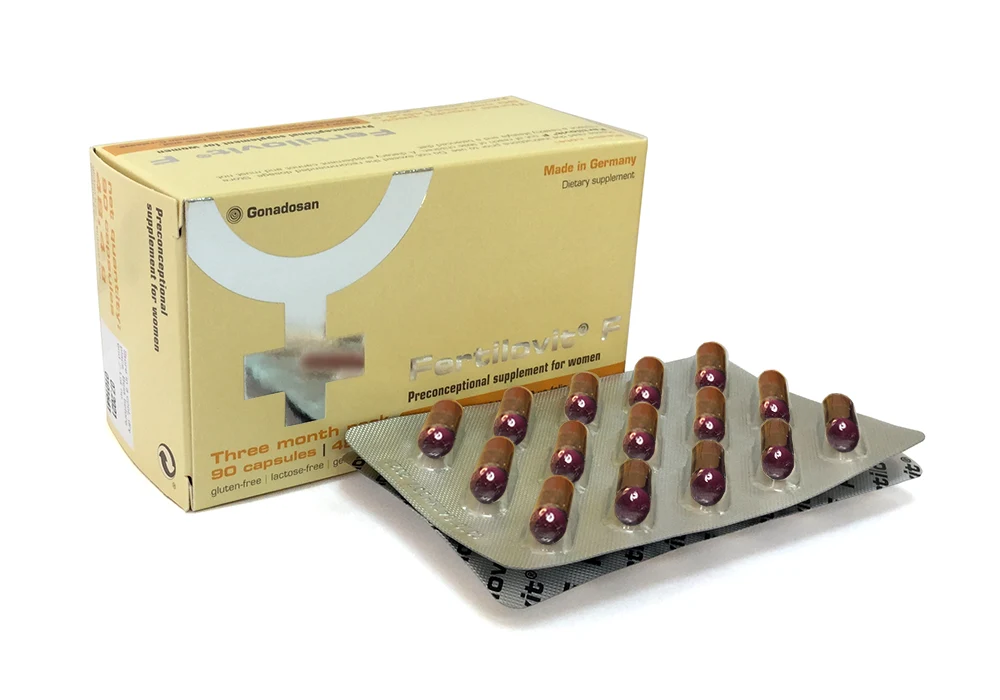
capsules.
Package size:
90 capsules, which corresponds to a 3-month supply.
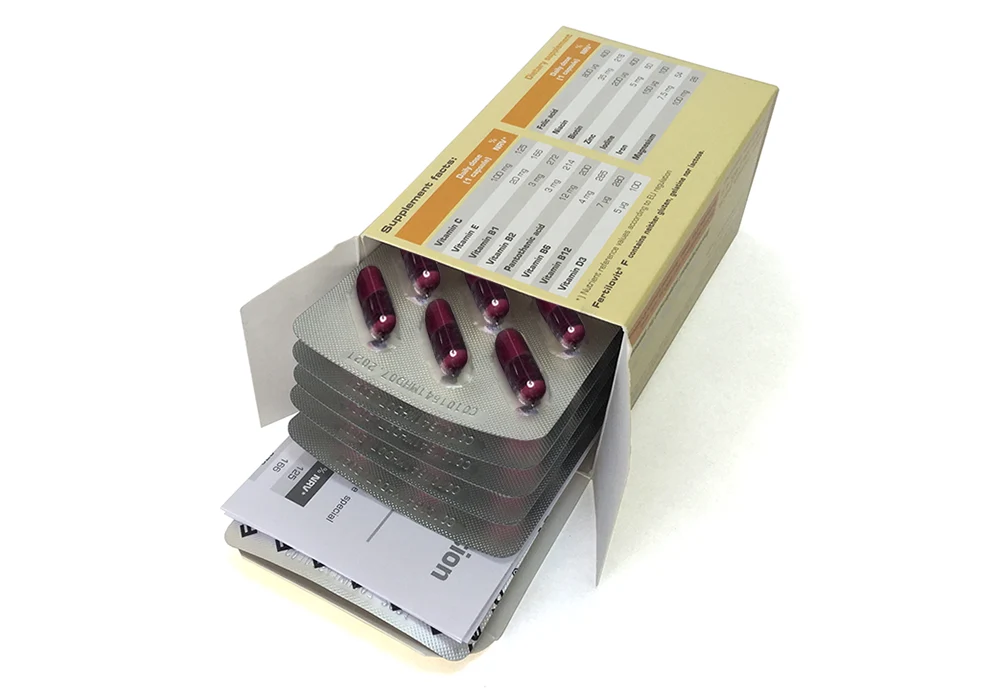
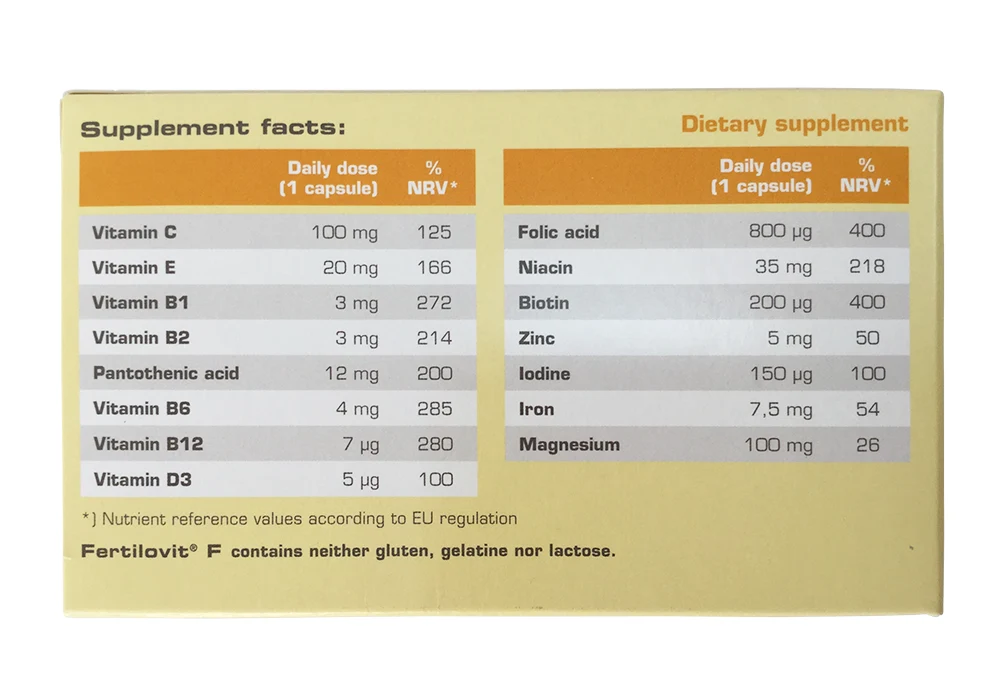
Supplement facts:
The composition of Fertilovit F meets the specific requirements necessary for pregnancy planning.
One capsule of Fertilovit F (daily dose) contains:
| One capsule | % RDA * | |
|---|---|---|
| Vitamin C | 100 mg | 125 |
| Vitamin E | 20 mg | 166 |
| Vitamin B1 | 3 mg | 272 |
| Vitamin B2 | 3 mg | 214 |
| Pantothenic acid | 12 mg | 200 |
| Vitamin B6 | 4 mg | 285 |
| Vitamin B12 | 7 µg | 280 |
| Vitamin D3 | 5 µg | 100 |
| Folic acid | 800 µg | 400 |
| Niacin | 35 mg | 218 |
| Biotin | 200 µg | 400 |
| Zinc | 5 mg | 50 |
| Iodine | 150 µg | 100 |
| Iron | 7,5 mg | 54 |
| Magnesium | 100 mg | 32 |
*% recommended daily allowance (according to EU guidelines)
Fertilovit F does not contain lactose and gelatin.
Instructions:
For best results, experts recommend starting Fertilovit® F three months before pregnancy.
Take one Fertilovit F capsule per day.
Please read the instructions before taking. Do not exceed the recommended dose. Keep Fertilovit F out of reach of children. A dietary supplement should not replace a healthy lifestyle and a balanced diet.
Please do not use Fertilovit F in case of autoimmune thyroiditis, impaired iron metabolism and obvious intolerance to any of the ingredients.
Scientifically proven qualities of each ingredient:
Vitamin C:
Vitamin C is a water-soluble antioxidant that protects the body’s cells, as well as fat-soluble vitamins such as E, from oxidation. Vitamin C is also important because it absorbs iron. Women should avoid high doses of vitamin C because it dries up the uterine fluid, preventing sperm from reaching the egg. Therefore, Fertilovit F contains a relatively low amount of vitamin C. However, to achieve maximum benefit from vitamin C, it is released in a slow-release form, providing its effect over many hours. A scientific study published in 2003 showed that women who take vitamin C supplements have a higher chance of conceiving.
Zinc:
Zinc is one of the essential minerals. However, the body is not able to provide it on its own and must obtain it through the diet. However, the body is not able to accumulate zinc. Zinc deficiency has been found to be quite common in Western countries.
In addition, zinc plays an equally critical role in the metabolism of carbohydrates, fats and proteins. In addition, the immune and hormonal systems, as well as antioxidant enzymes, require zinc for their activity. The most important function of zinc is its role in the synthesis of nucleic acids DNA and RNA, which are necessary for cell division, tissue repair and embryonic development.
Vitamin E:
Early studies in the 1960s showed that vitamin E promotes conception. This discovery has been confirmed by recent observations. The antioxidant properties of vitamin E strengthen the health of oocytes by effectively protecting these sensitive cells from the harmful effects of oxidative stress.
Niacin:
Niacin belongs to the B vitamins. It is present in every living cell and can accumulate in the liver. It forms a vital building block of various coenzymes and is involved in key metabolic processes. Additionally, it has antioxidant properties.
Vitamin B1:
Thiamine, or vitamin B, is a water-soluble vitamin that is essential for the nervous system.
Vitamin B2:
Vitamin B2, or riboflavin, is also called the “growth vitamin” in colloquial speech. It is an important precursor for coenzymes, which therefore plays a major role in metabolism.
Vitamin B5:
Vitamin B5, or pantothenic acid, is important for the formation of coenzyme A. Coenzyme A plays a major role in metabolism. It is involved in the synthesis and breakdown of carbohydrates, fats, and proteins, and is also necessary for the formation of cholesterol. Cholesterol is needed for the synthesis of steroid hormones, many of which are essential for reproduction.
Vitamin B6:
Vitamin B6 has been traditionally used to relieve symptoms of premenstrual syndrome and menopause. Recent studies have shown its importance for reproductive health. This effect is provided by vitamin B6’s participation in the homocysteine pathway. Homocysteine is a potentially harmful amino acid, and vitamin B6 is necessary for the breakdown of harmful molecules. Vitamin B6 deficiency is associated with hyperhomocysteinemia, which disrupts the process of conception and placental function.
Vitamin B12:
New studies have shown that vitamin B12 supplementation can promote conception and reduce the likelihood of miscarriage. Like vitamin B6, it is needed for the degradation of homocysteine.
Vitamin D3:
Vitamin D3, among other things, regulates calcium and phosphorus metabolism, thus being a key regulator of bone growth. Moreover, it is important for the development of the nervous and muscular systems.
Folic acid:
Folic acid is very specific and is easily destroyed during storage or formation, which is why its deficiency is quite common, despite the fact that fruits and vegetables are rich in folic acid.
Folic acid deficiency is associated with neurological disorders, such as Spina Bifida (spinal cleft).
In addition, it has antioxidant properties.
In conclusion, folic acid is important for homocysteine metabolism. Homocysteine is a potentially toxic amino acid that can be broken down into harmless molecules containing folic acid, vitamin B6 and vitamin B12. Increased homocysteine levels are associated with infertility, impaired placental function and an increased risk of miscarriage.
Polish studies published in 2003 showed that women who took folic acid during pregnancy prevention had better quality oocytes.
Biotin:
Biotin belongs to the B vitamins. It is composed of enzymes and is thus involved in key metabolic processes. It is also known to be involved in the epigenetic regulation of gene function. Animal studies have shown that biotin deficiency is associated with reduced fertility and an increased risk of malformations.
Iodine:
Iodine is a very important mineral that supports thyroid function. The thyroid gland produces hormones that are key regulators of growth and metabolism. As a result, it is essential for mothers to have sufficient iodine not only for themselves, but also for their child. Despite the fact that in countries with iodine deficiency, such as Austria, Switzerland and Germany, certain foods are fortified with iodine, the supply of iodine is still insufficient for expectant mothers.
This is associated with a health risk: a lack of this mineral in your diet can lead to weakened thyroid function and a reduced ability to conceive. In addition, a lack of iodine can disrupt the physical and mental development of the child.
Magnesium:
Magnesium deficiency is not uncommon during pregnancy. This is due to increased magnesium excretion on the one hand and the child’s need for magnesium on the other. The first symptom of magnesium deficiency can be cramps in the calf muscles, it can also manifest itself in increased excitability of the uterine muscles and, worst of all, provoke premature birth.
Iron:
Iron, a major component of hemoglobin, is considered essential as a blood-forming element that aids in conception by supporting ovulation.
Manufacturer Fertilovit F:
Gonadosan AG, Zollstrasse 34, FL-9490 Vaduz, Liechtenstein, in production areas: «BHI-Biohealth International GmbH» Heinrich-Wirth-Str. 13, D-95213 Munchberg, Germany, тел +49(0)9251 87087 20
www.gonadosan.com
Importer Fertilovit F:
Kleemed Ukraine LLC, Hlybochytska St., 40u, Kyiv 04050 Ukraine.
Tel. +38 (067) 462 00 77. Code 36282605
www.kleemed.com.ua